723 Cox Creek Parkway, Florence, AL 35630


In Florence, many patients don’t realize they have a cavity until something feels off, such as sensitivity when drinking iced tea, a dull ache during meals, or sudden discomfort that seems to come out of nowhere. By the time these symptoms appear, the decay has often progressed beyond its earliest stage, making treatment more involved than it needed to be.
Busy schedules, family responsibilities, and putting off routine checkups can make it easy to delay dental visits. But what many people don’t see is how small, undetected cavities quietly grow over time. Understanding how early detection works and why it matters can help you avoid unnecessary discomfort, reduce treatment time, and protect your long-term oral health.
Modern, Patient-Focused Care in Florence
At Johnson and Mahan Dental Care, Dr. Johnson, Dr. Mahan, and Dr. Kayla Holcombe focus on early diagnosis and precision-driven treatment. Their approach combines thorough clinical evaluation with modern tools that enhance visibility and accuracy during every exam.
One of the technologies used in the practice is telescopic loupes, magnifying lenses worn during procedures. These allow the dental team to see fine details that are often missed with the naked eye, supporting earlier detection of enamel changes and small areas of decay. This level of precision helps patients receive care that is more conservative and focused.
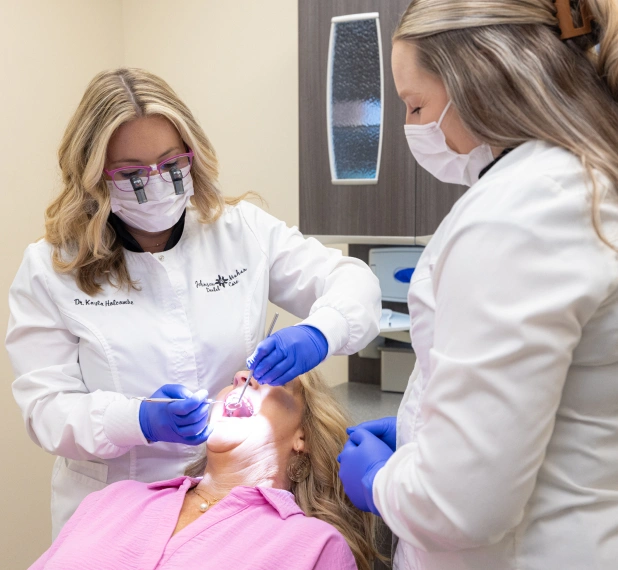
Patients looking for a dental office in Florence often value this type of attention to detail, especially when it comes to preventing more complex procedures down the line.
What Is a Cavity and How Does It Start?
A cavity forms when plaque, a sticky film of bacteria, produces acids that gradually weaken tooth enamel. This process doesn’t happen overnight. It begins at a microscopic level, often without visible signs or discomfort.
Early-stage cavity development:
- Acid attacks soften enamel
- Minerals are lost from the tooth surface
- Small, nearly invisible lesions begin to form
At this point, the damage may still be reversible or require minimal treatment. But without detection, it continues to progress deeper into the tooth.
Why Early Cavities Often Go Unnoticed
Many patients assume they’ll feel a cavity forming, but that’s rarely the case. Early decay tends to develop in areas that are difficult to see or feel.
Common reasons cavities are missed:
- Between teeth where visual access is limited
- Along the gumline
- Within tiny cracks or grooves
- Beneath the surface, before visible breakdown occurs
Without enhanced visibility, these subtle changes can be challenging to identify during routine exams.
How Early Detection Changes Everything
Detecting a cavity early significantly alters the course of treatment. Instead of addressing deep decay, your dental provider can intervene while the damage is still minimal.
Benefits of early cavity detection:
- Smaller fillings instead of extensive restorations
- Reduced need for anesthesia in some cases
- Preservation of more natural tooth structure
- Shorter, more efficient appointments
Patients visiting a Florence family dentist often appreciate how early detection reduces both the physical and financial impact of treatment.
How Telescopic Loupes Improve Cavity Detection
Telescopic loupes play an important role in identifying early-stage dental issues. These magnifying lenses provide a closer, more detailed view of the tooth surface.
What this means during your exam:
- Early enamel changes are easier to identify
- Tiny fractures or weak spots become visible
- Margins of existing fillings can be evaluated more precisely
This added clarity allows dentists to make more informed decisions and treat only what is necessary—nothing more.
How Can Early Cavity Detection Save You Time, Money, and Pain?
Early cavity detection helps prevent small areas of decay from progressing into larger dental problems. When cavities are identified early, treatment is typically faster, less invasive, and less expensive. It also reduces the likelihood of pain, infection, and the need for procedures like root canals or crowns.
What Happens When Cavities Are Detected Late?
When decay is not caught early, it continues to spread deeper into the tooth structure. This progression can lead to more serious complications.
Advanced cavity risks:
- Infection reaching the inner pulp
- Increased sensitivity or persistent pain
- Need for root canal treatment
- Structural damage requiring crowns or extractions
These treatments are more time-consuming and often require multiple visits.
The Financial Impact of Delayed Treatment
From a cost perspective, early detection is one of the most effective ways to manage dental expenses over time.
Comparison:
- Early cavity → simple filling
- Moderate decay → larger restoration
- Advanced decay → root canal + crown
Addressing a cavity early avoids the escalation of treatment complexity, helping patients maintain both oral health and financial stability.
Prevention and Whole-Body Health
Oral health is closely connected to overall wellness. Untreated decay and gum disease can contribute to inflammation, which has been linked to broader health concerns.
Why Your Mouth Affects Your Whole Body
The biology is well understood. Oral bacteria from untreated gum disease can enter the bloodstream and trigger inflammation throughout the body, a pathway linked to heart disease, stroke, diabetes complications, and respiratory infections. Tooth loss also affects chewing ability, food choices, and nutritional intake, all of which become more consequential as people age. This is why every dental visit should be seen as part of a larger health picture.
Early cavity detection plays a role in reducing these risks by limiting bacterial progression and maintaining oral stability.
Signs You Shouldn’t Ignore
Even though early cavities are often silent, there are subtle signs that may indicate a developing issue:
- Sensitivity to hot, cold, or sweet foods
- Discoloration or dark spots on teeth
- Mild discomfort when biting
- Rough or uneven tooth surfaces
If you notice any of these changes, scheduling an evaluation sooner rather than later can make a significant difference.
When Should You Schedule a Checkup?
Routine dental visits are the foundation of early detection. Most patients benefit from exams every six months, though individual needs may vary.
During these visits, your dental provider can:
- Monitor small changes over time
- Identify early decay before symptoms develop
- Recommend preventive strategies based on your risk factors
Consistency is key to avoiding unexpected dental issues.
We focus on identifying problems early so they don’t become disruptive later. By combining careful evaluation with tools like telescopic loupes, we aim to keep treatment conservative, efficient, and comfortable. If it has been a while since your last checkup or you’ve noticed subtle changes, we encourage you to schedule a visit with Johnson and Mahan Dental Care. Early care makes a measurable difference, and we are here to help you stay ahead of it.
Frequently Asked Questions
Can a cavity be reversed if caught early?
In very early stages, enamel can sometimes be strengthened through remineralization. Once a cavity forms, a small filling is usually needed to stop progression.
How do dentists detect cavities before they cause pain?
Dentists use visual exams, diagnostic tools, and magnification—such as telescopic loupes—to identify subtle enamel changes before symptoms appear.
Are early cavity treatments painful?
Most early treatments are quick and involve minimal discomfort, especially compared to procedures required for advanced decay.
How often should I get checked for cavities?
Routine exams every six months are typical, though your dentist may recommend a different schedule based on your oral health.
Do all dental offices use magnification tools like loupes?
Not all practices use them, but magnification enhances visibility and supports more precise diagnosis and treatment.